Upper Bann

§ This page provides a baseview of UK constituency, bringing together various information and resources to help you better understand the area of Upper Bann.
Overview ⁞ Upper Bann is a vibrant area centred on the towns of Lurgan, Portadown, and Banbridge. The River Bann runs through the constituency, offering fishing and boating opportunities. Lurgan Park is one of Northern Ireland’s largest urban parks, while the Craigavon Lakes are popular for outdoor recreation. The area has a strong retail and leisure presence, with The Outlet shopping centre in Banbridge attracting visitors from across the region. Scenic countryside surrounds these towns, blending urban energy with rural charm.
Constituency Map and Boundary Information
Below is an interactive map showing the boundary of the Upper Bann parliamentary constituency. The boundary data is sourced from the Office for National Statistics (ONS), using the latest official geographic definitions.
You can explore official statistics for this area on the ONS Explore Local Statistics page, or view its location on the UK Parliament constituency map.
Map tiles © OpenStreetMap contributors. Boundary data: Contains Ordnance Survey data © Crown copyright and database right 2024; Contains Office for National Statistics data © ONS 2024, licensed under the Open Government Licence v3.0.
Wards in Upper Bann Constituency
There are 23 wards, listed below in alphabetical order.
- Ballybay
- Banbridge East
- Banbridge North
- Banbridge South
- Banbridge West
- Bleary
- Brownlow
- Corcrain
- Craigavon Centre
- Derrytrasna
- Donaghcloney
- Gilford
- Kernan
- Killycomain
- Knocknashane
- Lough Road
- Loughgall
- Mahon
- Mourneview
- Parklake
- Shankill
- The Birches
- Waringstown
Upper Bann is a constituency that covers these wards in Armagh City, Banbridge and Craigavon.
Population by age group
Upper Bann Population ⁞ The most recent data for constituencies in England and Wales comes from mid-year estimates for 2022. This tells us what the population was estimated to be on 30 June 2022.
| Age Band | Constituency (Number) | Constituency (%) | Northern Ireland (Number) | Northern Ireland (%) |
|---|---|---|---|---|
| 0 to 17 | 30,165 | 24.27% | 436,622 | 22.74% |
| 18 to 24 | 8,734 | 7.03% | 149,248 | 7.77% |
| 25 to 34 | 16,336 | 13.15% | 240,231 | 12.51% |
| 35 to 49 | 25,541 | 20.55% | 374,384 | 19.50% |
| 50 to 64 | 23,362 | 18.80% | 377,415 | 19.65% |
| 65 and over | 20,127 | 16.20% | 342,482 | 17.83% |
Population by ethnic group
Upper Bann Ethnicity ⁞ The most recent census asked people about their ethnic group. The census was carried out in March 2021 in England, Wales and Northern Ireland and in March 2022 in Scotland.
| Ethnic Group | Constituency (Number) | Constituency (%) | Northern Ireland (%) |
|---|---|---|---|
| White | 116,471 | 95.44% | 96.55% |
| Mixed | 1,178 | 0.97% | 0.76% |
| Black African | 1,034 | 0.85% | 0.42% |
| Other Asian | 502 | 0.41% | 0.28% |
| Indian | 497 | 0.41% | 0.52% |
| Chinese | 468 | 0.38% | 0.50% |
| Black Other | 463 | 0.38% | 0.16% |
| Filipino | 344 | 0.28% | 0.23% |
| Irish Traveller | 334 | 0.27% | 0.14% |
| Other ethnicities | 306 | 0.25% | 0.19% |
| Pakistani | 219 | 0.18% | 0.08% |
| Roma | 134 | 0.11% | 0.08% |
| Arab | 90 | 0.07% | 0.10% |
Upper Bann compared with other constituencies
Upper Bann has a population of 124,265 (2024 mid-year estimate by ONS). The population of the UK is 69,281,400 as of mid-2024. There are 650 constituencies, so the average population per constituency is around 106,600.
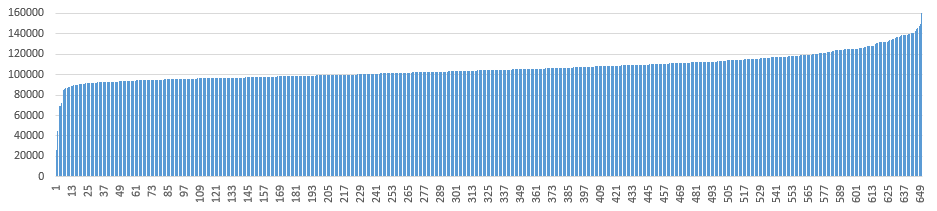
Compared with the other 649 constituencies, Upper Bann has a population higher than 580, lower than 44, and similar to 26 constituencies (±2,500, including itself).
Latest news about Upper Bann
Use the search box or suggested search phrases below to find recent news, local updates, election coverage, public services stories, planning issues, transport updates and community developments related to Upper Bann. Results may include coverage from UK national, regional and local news websites, as well as trusted public-interest sources.