Foyle

§ This page provides a baseview of UK constituency, bringing together various information and resources to help you better understand the area of Foyle.
Overview ⁞ Foyle centres around the historic city of Derry~Londonderry, known for its 17th-century walls, vibrant cultural scene, and riverside setting along the River Foyle. Landmarks include the Peace Bridge, Guildhall, and the Tower Museum, while the city’s Bogside murals tell the story of its heritage. Beyond the city, the constituency features lush countryside, charming villages, and coastal scenery leading towards Inishowen in County Donegal. With festivals, music, and a rich architectural heritage, Foyle is both a cultural and scenic destination.
Constituency Map and Boundary Information
Below is an interactive map showing the boundary of the Foyle parliamentary constituency. The boundary data is sourced from the Office for National Statistics (ONS), using the latest official geographic definitions.
You can explore official statistics for this area on the ONS Explore Local Statistics page, or view its location on the UK Parliament constituency map.
Map tiles © OpenStreetMap contributors. Boundary data: Contains Ordnance Survey data © Crown copyright and database right 2024; Contains Office for National Statistics data © ONS 2024, licensed under the Open Government Licence v3.0.
Wards in Foyle Constituency
There are 25 wards, listed below in alphabetical order.
- Ballymagroarty
- Brandywell
- Carn Hill
- Caw
- City Walls
- Clondermot
- Creggan
- Creggan South
- Culmore
- Drumahoe
- Ebrington
- Enagh
- Foyle Springs
- Galliagh
- Kilfennan
- Lisnagelvin
- Madam's Bank
- New Buildings
- Northland
- Shantallow
- Shantallow East
- Sheriff's Mountain
- Skeoge
- Springtown
- Victoria
Foyle is a constituency that covers these wards in Derry City and Strabane.
Population by age group
Foyle Population ⁞ The most recent data for constituencies in England and Wales comes from mid-year estimates for 2022. This tells us what the population was estimated to be on 30 June 2022.
| Age Band | Constituency (Number) | Constituency (%) | Northern Ireland (Number) | Northern Ireland (%) |
|---|---|---|---|---|
| 0 to 17 | 23,326 | 23.85% | 436,622 | 22.74% |
| 18 to 24 | 7,695 | 7.87% | 149,248 | 7.77% |
| 25 to 34 | 12,243 | 12.52% | 240,231 | 12.51% |
| 35 to 49 | 19,268 | 19.70% | 374,384 | 19.50% |
| 50 to 64 | 19,406 | 19.84% | 377,415 | 19.65% |
| 65 and over | 15,852 | 16.21% | 342,482 | 17.83% |
Population by ethnic group
Foyle Ethnicity ⁞ The most recent census asked people about their ethnic group. The census was carried out in March 2021 in England, Wales and Northern Ireland and in March 2022 in Scotland.
| Ethnic Group | Constituency (Number) | Constituency (%) | Northern Ireland (%) |
|---|---|---|---|
| White | 94,500 | 97.12% | 96.55% |
| Mixed | 713 | 0.73% | 0.76% |
| Indian | 713 | 0.73% | 0.52% |
| Chinese | 267 | 0.27% | 0.50% |
| Filipino | 198 | 0.20% | 0.23% |
| Irish Traveller | 179 | 0.18% | 0.14% |
| Black African | 178 | 0.18% | 0.42% |
| Other ethnicities | 155 | 0.16% | 0.19% |
| Other Asian | 153 | 0.16% | 0.28% |
| Pakistani | 85 | 0.09% | 0.08% |
| Arab | 80 | 0.08% | 0.10% |
| Black Other | 72 | 0.07% | 0.16% |
| Roma | 12 | 0.01% | 0.08% |
Foyle compared with other constituencies
Foyle has a population of 97,790 (2024 mid-year estimate by ONS). The population of the UK is 69,281,400 as of mid-2024. There are 650 constituencies, so the average population per constituency is around 106,600.
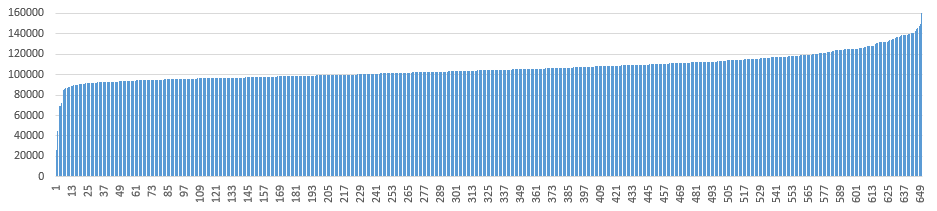
Compared with the other 649 constituencies, Foyle has a population higher than 82, lower than 423, and similar to 145 constituencies (±2,500, including itself).
Latest news about Foyle
Use the search box or suggested search phrases below to find recent news, local updates, election coverage, public services stories, planning issues, transport updates and community developments related to Foyle. Results may include coverage from UK national, regional and local news websites, as well as trusted public-interest sources.